
A source is usually primary when it provides evidence created during the period or experience being studied; later analysis is generally secondary. Classification still depends on your research question, so check who created the item, when it was created, its relationship to events, and how you intend to use it.
What Makes a Source Primary or Secondary?
A primary source is generally an artifact, document, recording, or other item created during the period under study. It offers evidence connected to the people, experiences, institutions, or events being investigated. A secondary source interprets, analyzes, or comments on primary material.
This distinction is not determined by age alone. Before classifying an item, define the period and question you are researching. An older text that retrospectively interprets an earlier event may be secondary for a study of that event. Conversely, that same text could become primary evidence for a question about the author, the time in which the interpretation was written, or changing representations of feminist history.
Classification therefore describes an item’s role in a particular investigation, not a permanent quality attached to its format. Ask what the source can directly evidence and where it relies on interpretation of other material.

A Four-Part Check for Archival Materials
Use four connected checks rather than relying on a catalogue label or document type.
- Creator: Identify the person or organization responsible for the item. Consider whether the creator participated in, witnessed, recorded, or later studied the subject.
- Date and setting: Compare the creation date with the period under investigation. Note the historical setting in which the item was produced, rather than assuming that every old document is contemporary with your subject.
- Relationship to events: Examine the creator’s proximity to the event or experience. A direct record and a retrospective account may answer different questions, even when both contain useful historical evidence.
- Research use: State what claim the item will support. Decide whether you are treating it as evidence from the period or as later analysis of that evidence.
Contemporaneity is an important clue, but it cannot settle classification by itself. Origin, content, proximity, historical context, and intended use all matter. Record these details in your notes so another reader can understand why you classified the source as primary or secondary.
How Context Changes the Classification
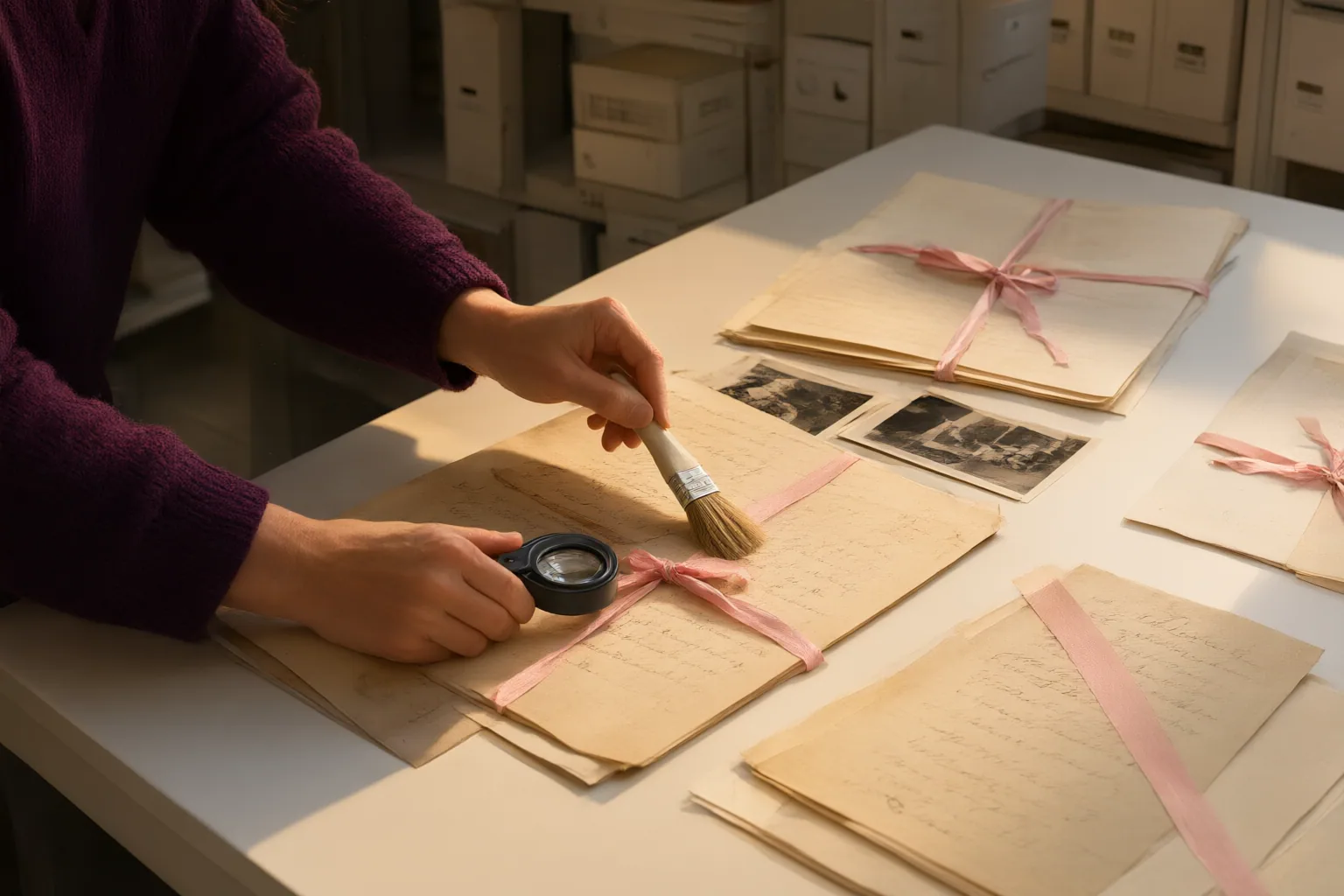
Women’s-history collections can include letters, diaries, photographs, books, periodicals, ephemera, oral histories, audiovisual records, suffrage documents, and papers created by feminist activists. These are possible forms of primary evidence, but their presence on such a list does not automatically determine how every individual item should be classified.
A letter may provide primary evidence of what its writer communicated at a particular time. A diary may document personal experience, while a photograph may preserve visual evidence connected to its production. Periodicals, newspapers, oral histories, activist papers, reviews, and documentary works require the same contextual examination: identify their creators, dates, contents, relationships to events, and roles in the question being asked.
A memoir illustrates why this matters. It can be primary evidence for research into its author’s life or how that author remembered an experience. If it offers a retrospective account of wider social conditions, however, a researcher may use that part as later interpretation rather than direct evidence of those conditions.
The same flexibility applies across formats. A newspaper report might be evidence of contemporary reporting practices while also containing claims that require comparison with other records. A later documentary may be secondary analysis of earlier events but primary evidence for research into how those events were subsequently represented. Classification should be attached to a specific use, with the reasoning made explicit.
Conclusion
Identify primary sources by relating each item to a defined period and research question. Date and format provide clues, but creator, historical setting, proximity to events, content, and interpretive role complete the assessment. This method also prevents original records from being confused with teaching materials or later historical syntheses that may appear beside them.
Choose one archival item now and write down its creator, creation date, relationship to the events, and role in your research question. Then classify it and preserve that reasoning in your notes.
Disclosures and limitations
- This article was prepared with AI assistance from the supplied research sources. The evidence explains general source-classification principles and examples from predominantly United States-focused women’s-history collections; it does not establish the holdings or cataloguing practices of any specific Portuguese feminist archive.
Related reading
Sources
- Wikipedia talk:Identifying and using primary sources – Wikipedia — en.wikipedia.org
- Women's History Collections – Feminist Majority Foundation — Feminist Majority Foundation
- Primary source — Grokipedia — Grokipedia
- Primary source – Wikipedia — en.wikipedia.org