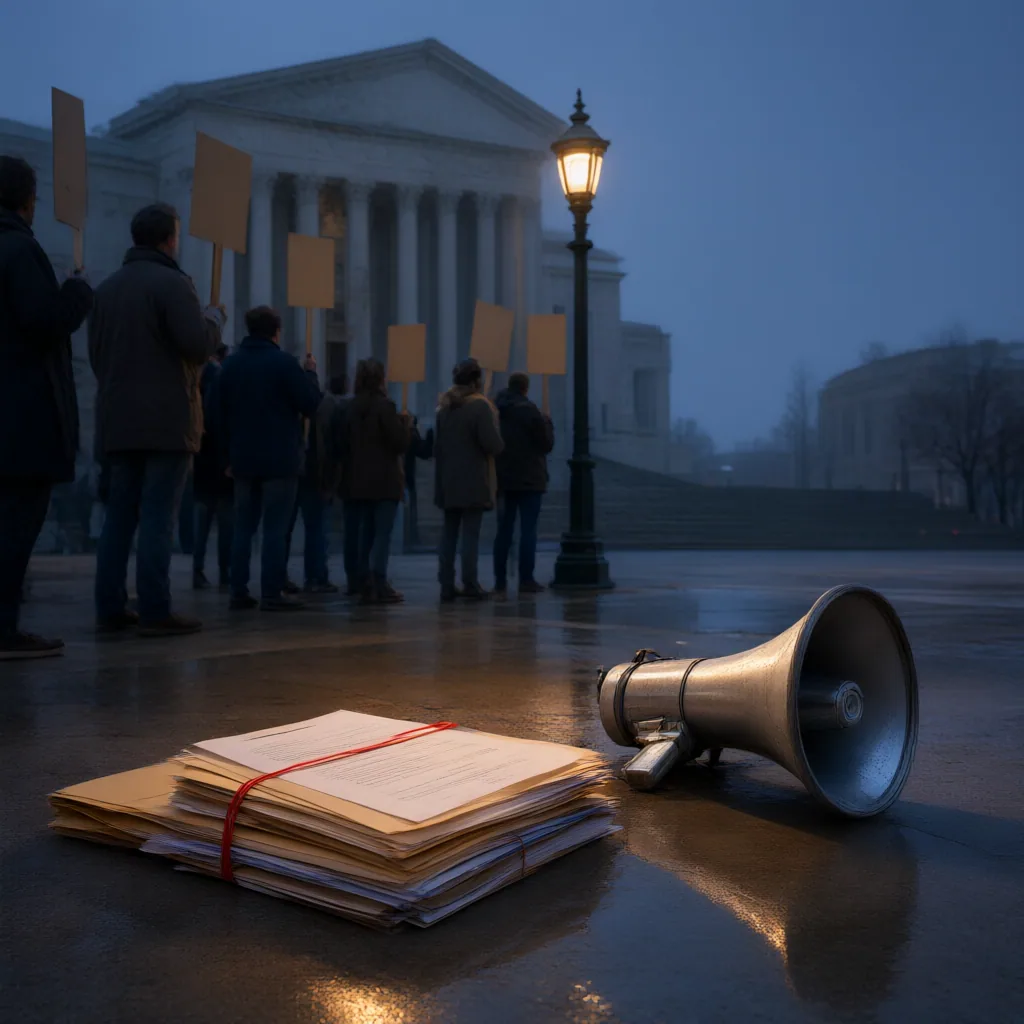
A public protest following an acquittal can become an important civic record: it shows how communities respond when a court outcome is seen as incompatible with safety, dignity, or justice for survivors of sexual violence. This page preserves a concise, reader-focused account of that kind of protest material so researchers, educators, journalists, and the public can understand its context without overstating details that have not been confirmed.
What this record documents
The available evidence indicates that this item relates to a protest against an acquittal in a sexual violence case and appears to have functioned as a public call or announcement connected to collective action. The exact wording, date, and full original text are not fully available from the source presently checked.
Availability not confirmed
Details being checked
That means this page should be read as a contextual record rather than a complete reproduction of the original material. It identifies the subject clearly while avoiding claims about attendance, organizers, legal reasoning, or event outcomes unless those points can be verified directly.
Why protests like this matter in the public record
Records of protest help document how feminist and civic movements respond to judicial decisions that raise public concern. In cases involving sexual violence, public statements, demonstrations, and calls to gather often carry more than immediate political urgency: they also reflect wider debates about consent, accountability, institutional culture, and the treatment of survivors in public discourse.
By keeping the focus on the documented subject, this page supports careful reference use. Readers can situate the protest within broader discussions of gender-based violence and public advocacy without treating incomplete source traces as settled evidence.
How to read an incomplete announcement record
When a source page is unavailable or only partly traceable, the most responsible approach is to separate what is identifiable from what remains uncertain. Here, the identifiable core is the subject: a protest against an acquittal, preserved as a public-interest record. Uncertain elements include the full announcement text, any exact schedule or venue wording, and the complete framing used in the original publication.
For researchers and educators, that distinction matters. It allows the record to remain useful for context, chronology, and topic discovery while protecting against accidental overstatement. Readers looking for stronger factual confirmation should compare this entry with contemporaneous reporting, organizational statements, and archived citations where accessible.