
Assess an operator’s stated measures by mapping the entire journey, distinguishing security equipment from prevention policy, and requesting clear information about reporting, response, privacy, implementation, and results. The available sources do not confirm these details for any operator in Portugal.
Map Where the Operator’s Measures Apply
Begin with a typical journey rather than an operator’s general safety statement. Public transport can include city buses, trolleybuses, trams or light rail, rapid transit, passenger trains, and ferries. Services commonly follow fixed routes and use designated boarding points, although high-frequency routes may operate at regular intervals instead of emphasizing exact departure times.
Trace each environment a passenger encounters: the approach to the boarding point, stop or station, platform, vehicle, interchange, and exit. Include walking or feeder connections where they form part of the journey. Then compare that map with the operator’s published description. Does the statement identify particular vehicles and locations, or merely refer to the network as a whole? Does it explain whether a measure applies on platforms as well as vehicles, during transfers, and at different operating times?
Record each location as covered, not covered, or unclear. “Availability not confirmed” is the appropriate label when the public information does not establish whether a measure exists in a particular setting. This method does not prove that a gap exists; it identifies the questions that the operator’s public material has not answered.

Separate Security Technology From Harassment Prevention
Treat equipment lists as descriptions of capabilities, not evidence of a complete sexual harassment prevention system. One supplier, Maestronic, describes transport-security offerings that include cameras inside and outside vehicles and on platforms, remote access and monitoring, passenger-screen feedback, and an SOS button. It also lists remote alert feedback, incident management, vehicle-location tracking, live audio and video, and driver communication.
These categories can help readers formulate precise questions. For cameras, ask what areas are covered and what happens when an incident is observed or reported. For an SOS button, ask who receives the alert and what response follows. For incident-management or communication tools, ask how reports are recorded, assigned, and resolved. For passenger screens, ask what information is displayed and whether it helps people understand reporting options.
The supplied material does not establish that any Portuguese public transport operator has adopted these systems. It also provides no evidence that the listed capabilities prevent sexual harassment or improve outcomes in Portugal. The supplier’s account should therefore be identified as commercial material rather than independent evaluation. Mark adoption and effectiveness as “Details being checked” unless an operator or independent source provides suitable evidence.
Check Reporting, Response, Privacy, and Evidence
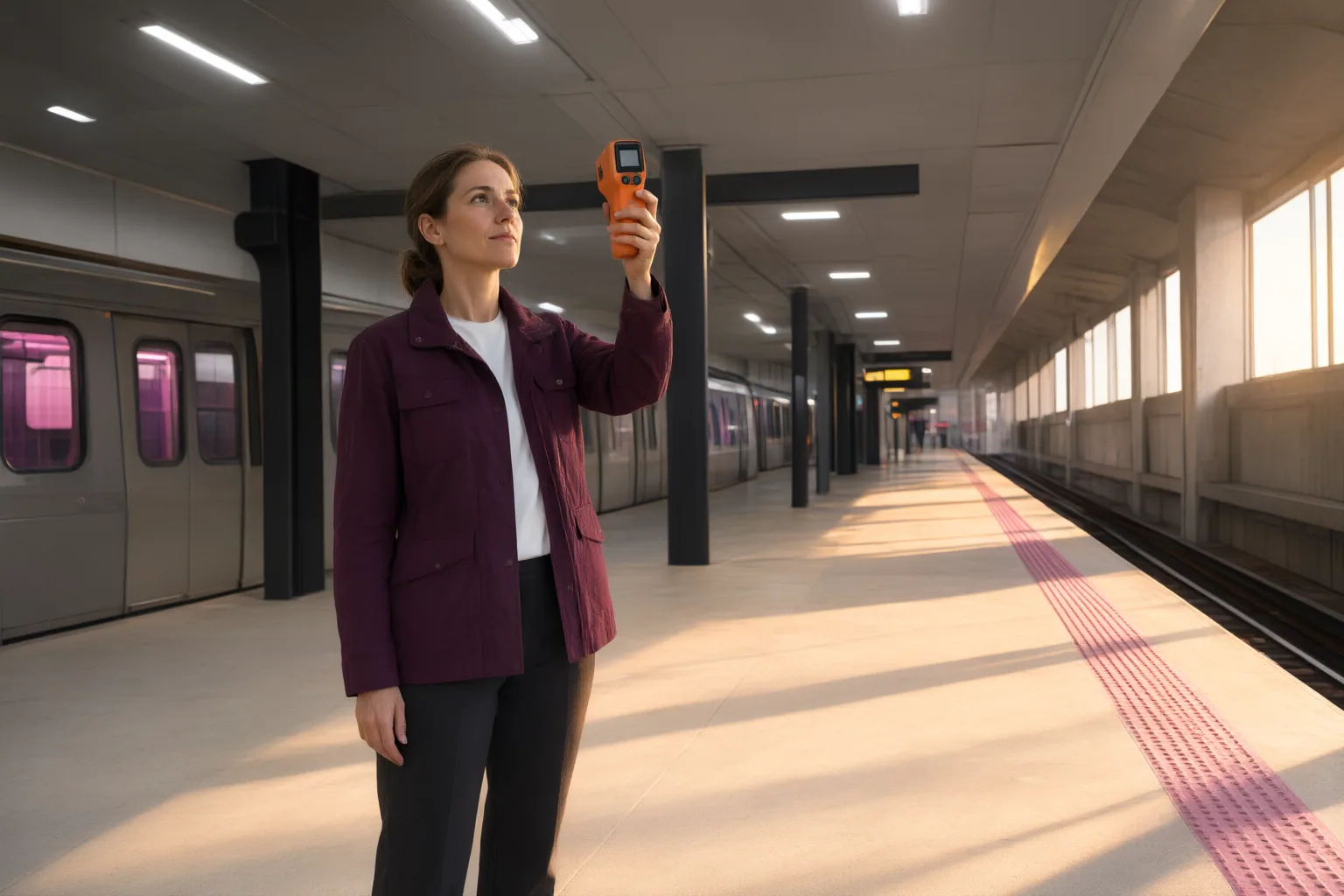
After identifying the stated measures, examine the procedures around them. A technology list alone does not explain reporting accessibility, staff duties, response steps, privacy protections, or effectiveness. Ask the operator to publish answers that passengers can understand before they need to make a report.
For reporting, check which channels are described, which journey environments they cover, and whether instructions explain what information a passenger can provide. For response, ask who receives a report, which staff role takes responsibility, how an urgent alert differs from a later complaint, and how the passenger is told what happens next. These are evaluation questions, not claims that a particular process currently exists.
For surveillance, live audio or video, location tracking, and incident records, look for a clear account of the applicable privacy safeguards. Readers can ask what information is collected, why it is collected, who can access it, and how the operator explains its handling. The supplied sources do not answer those questions for Portuguese operators.
Finally, distinguish implementation evidence from descriptions. Useful scrutiny includes asking whether the operator can show that a stated measure is operating in the locations claimed, whether staff responsibilities are documented, and what evidence is used to assess results. Supplier descriptions establish only what a vendor markets. The available material contains no documented Portuguese operator policy, reporting procedure, implementation record, or sexual-harassment outcome, and it provides no source-specific publication dates. Where those points remain unresolved, use “Details being checked” rather than treating the measure as verified or current.
Conclusion
A practical assessment has five parts: map the whole journey, identify exactly where each stated measure applies, separate equipment from prevention procedures, examine reporting and privacy information, and request evidence of implementation and results. This approach keeps broad safety language, supplier claims, and documented operator practice in separate categories.
Do not infer protection across an entire network from a feature mentioned for one vehicle or location. Do not infer effectiveness from the presence of cameras, SOS buttons, monitoring, or incident-management tools. If public information does not answer a question, label the point “Availability not confirmed” or “Details being checked.”
Choose one operator and trace one typical journey from its access point to the destination. Compare every stage with the operator’s public information, then ask for clear answers about coverage, reporting channels, response responsibilities, privacy safeguards, implementation, and the evidence used to evaluate results.
Disclosures and limitations
- This article was prepared with AI assistance from the supplied research package. Its factual statements are limited to the two identified sources; the available material does not confirm Portuguese operators’ policies, implementation, outcomes, or the currency of source information.
- The cited technology descriptions come from a supplier’s own material and are not independent evidence or product recommendations. No affiliate relationship is stated in the supplied information.
Related reading
- Sexual Harassment Awareness
- Sexual Harassment in Portuguese Internships, Apprenticeships, and Volunteer Placements: Who Is Responsible?
Sources
- Public transport – Wikipedia — en.wikipedia.org
- Maestronic Real Time Passenger Information Systems | Digital Signage — maestronic-its